EDO ONLINE

EIKETSUDEN / EIKETSUDEN

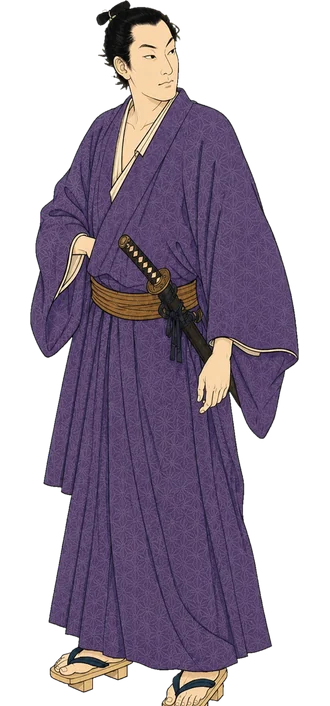
Takasugi Shinsaku

In a world where nothing is amusing — live it amusingly.

COMING SOON6 days until launch

Event periodAug 1, 2026 10:00Aug 28, 2026 20:00

Bakumatsu Chōshū. Born to a house of upper samurai, he stepped off the smooth life promised him at every turn, by his own hand. Eiketsuden: Takasugi Shinsaku is a limited-time event that retraces his twenty-seven years through woodblock scenes and story — and lets you live them.

Sign up / Log in with Google
Learn more about EDO ONLINE

Opening soon. Sign up now and be ready for launch.

Who was Takasugi Shinsaku?

Takasugi Shinsaku (1839–1867) was a man of purpose (shishi) born into the Chōshū domain in the closing years of the Edo period. He was the eldest son of Takasugi Chūta, of a house ranked among the upper samurai, and grew up in Kikuya Lane in the castle town of Hagi. Neither stipend nor standing was lacking, and a road was laid out for him from the start — study at the domain academy, then inherit the house. But this youth feared boredom above all. In 1857, at nineteen by the traditional count, he passed through the gate of the Shōka Sonjuku to study under Yoshida Shōin, and with Kusaka Genzui was called one of the school's two jewels.

In 1862 the domain chose him to sail aboard the Senzaimaru, the shogunate's trade-survey ship, to Shanghai. What he saw there was Qing China half-colonized, eaten away by the Western powers. The following year, in a Chōshū that had learned the limits of expelling the foreigner at Shimonoseki, he formed an army of volunteers that asked no man his rank — the Kiheitai. He held its command for only some three months, however, before being dismissed over the Kyōhō-ji incident. He was driven from the army he himself had built.

At the close of 1864, with the domain's counsel pushed back toward submission to the shogunate, he rose in arms at Kōzan-ji in Shimonoseki with barely eighty-odd men — and pulled Chōshū back onto the road to toppling the shogunate. In the Four-Border War of 1866 he led the navy and drove back the shogunate's host. But his lungs were already failing. He died at Shimonoseki in 1867, aged twenty-seven. The shogun returned power to the emperor half a year later; Takasugi never saw the Restoration.

Read more in our feature

Relive a whole life

8 chapters. Trace his life through woodblock scenes and story.

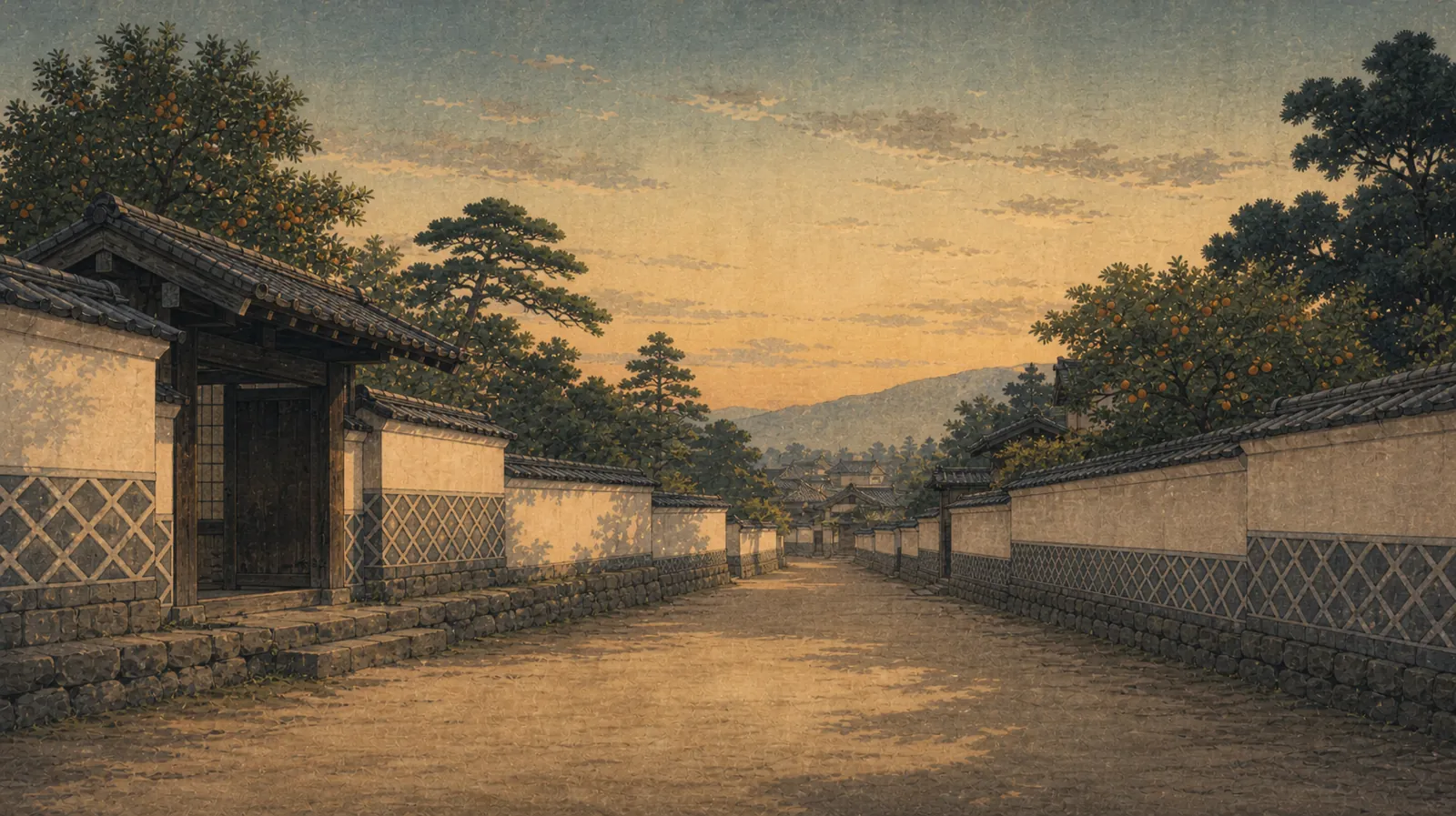
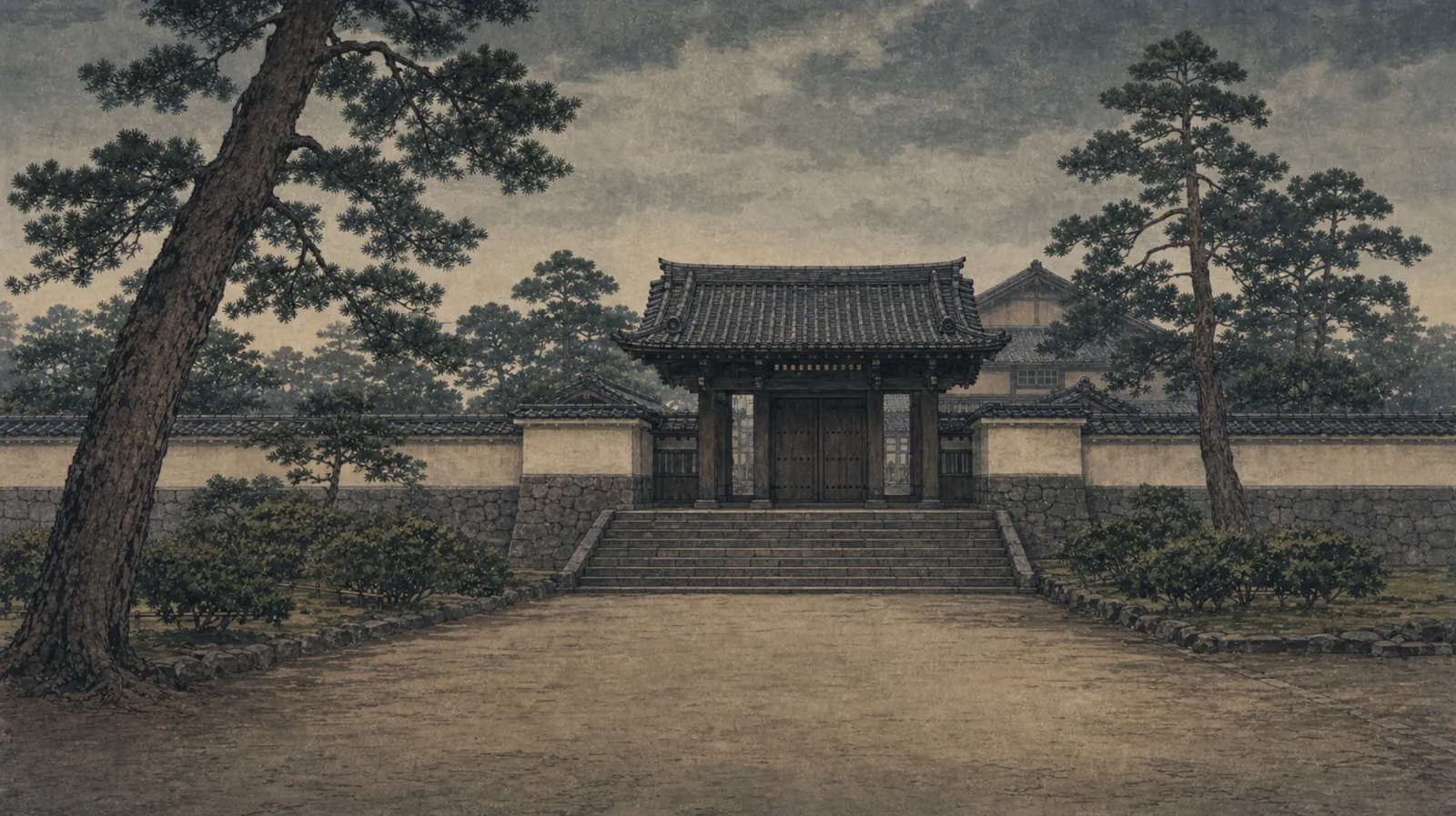
Kikuya Alley
Kikuya AlleyThe samurai quarter of Hagi castle town, lined with the lattice-plastered walls of the upper ranks.
Chapter 11852

Hagi: The House of Takasugi

The autumn of Tenpō 10. In the castle town of Hagi, in Chōshū, a baby boy was born. His father was Takasugi Chūta, of a house ranked among the upper samurai of the Chōshū domain—a family of real standing. Their residence stood in Kikuya Lane, close to the castle, and they wanted for nothing. The firstborn son would one day be known as Shinsaku. This was Takasugi Shinsaku himself.

Under the same Chōshū sky was another man who would one day shake the age. From the Sugi household of Matsumoto village—a low-ranking samurai family of the slenderest stipend, who worked the fields together just to scrape by—came Yoshida Shōin. The two who would in time become teacher and pupil already stood in contrast from the very rank of the houses they were born into. One grew up in the smell of the soil; the other, in the comfort of the castle town.
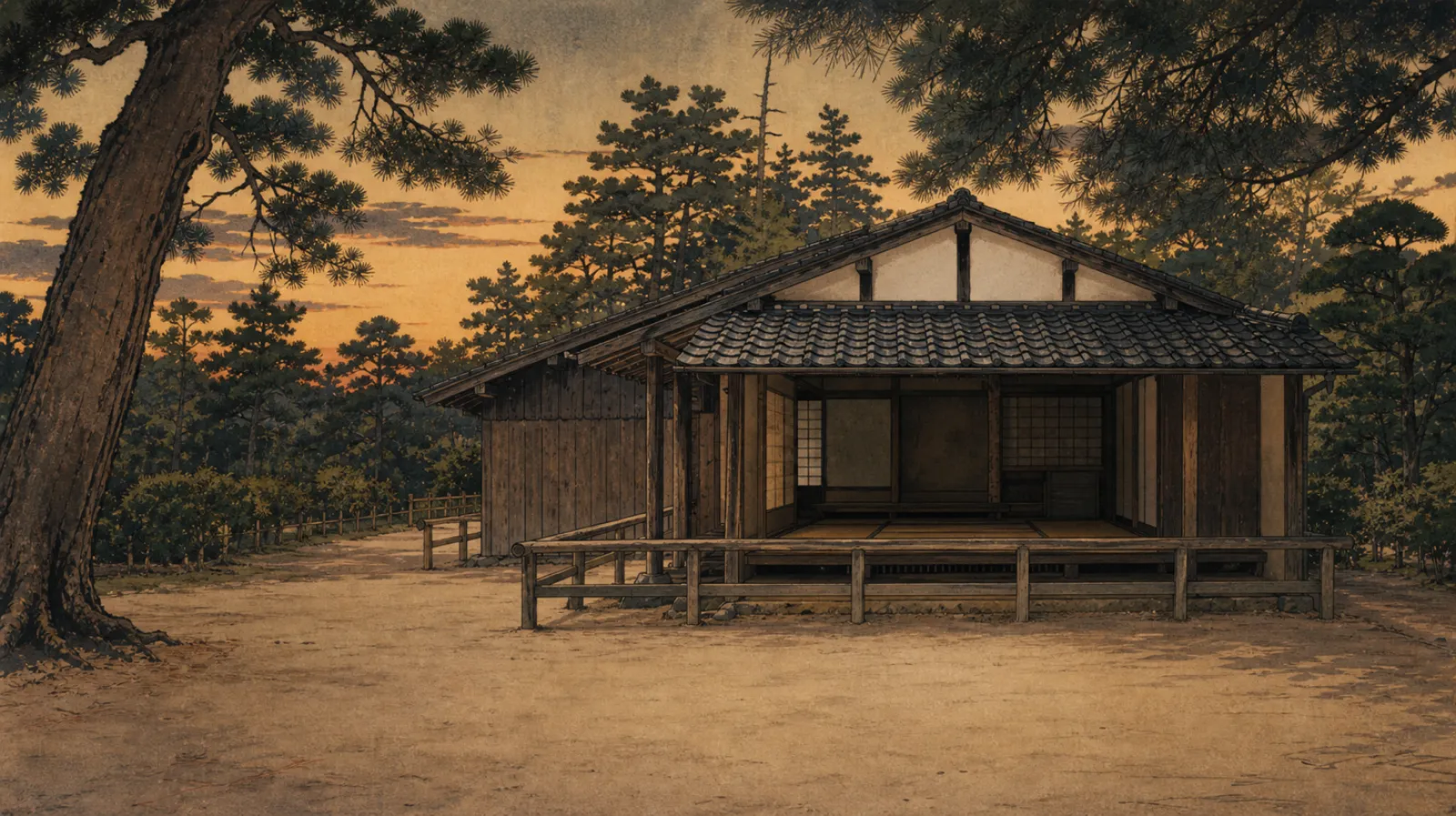
Shōka Sonjuku at Dusk
Shōka Sonjuku at DuskThe Shōka Sonjuku aglow at dusk — the school that raised the engine of the Restoration.
Chapter 21857

Shōka Sonjuku

Ansei 4. Shinsaku, now nineteen by the traditional count, passed through the gate of a small private academy in Matsumoto village, in Hagi. The Shōka Sonjuku—its master was Yoshida Shōin. He had once traveled through the provinces, been seized for trying to board the black ships, and was now, as a convicted man, kept under house confinement at his family home. Within that scant freedom, Shōin had opened this schoolhouse of some six mats.

For the child of an upper samurai to attend a village academy run by a convicted man was, in the eyes of the world, a somewhat strange choice. The domain had a splendid academy of its own, the Meirinkan. By his family's standing, that was where Shinsaku's road should have led. But what drew this youth, who found the road laid out for him dull, was not the learning within the walls, but the gaze of Shōin, who sought to see beyond them.

The Shōheizaka Academy
The Shōheizaka AcademyThe shogunate's own highest academy, where the ablest students of every domain sat side by side.
Chapter 31858

Study in Edo

Ansei 5. Having obtained the domain's leave, Shinsaku set out for Edo to study. For a youth whose eyes had been opened to the world at the village academy, the castle town of Chōshū had grown far too narrow. To touch a broader learning, and a greater number of people, in Edo, the center of the realm—that thirst turned him eastward.

In Edo he gained the chance to study at the Shōheikō, the shogunate's own academy. He set his desk beside the brilliant minds gathered from across the country and vied with them in learning. But Shinsaku was not one to shut himself away in the study alone. He also attended a swordsmanship training hall and poured out his sweat there. The sword he had honed in Hagi, he now tested against the finest swordsmen of the realm.

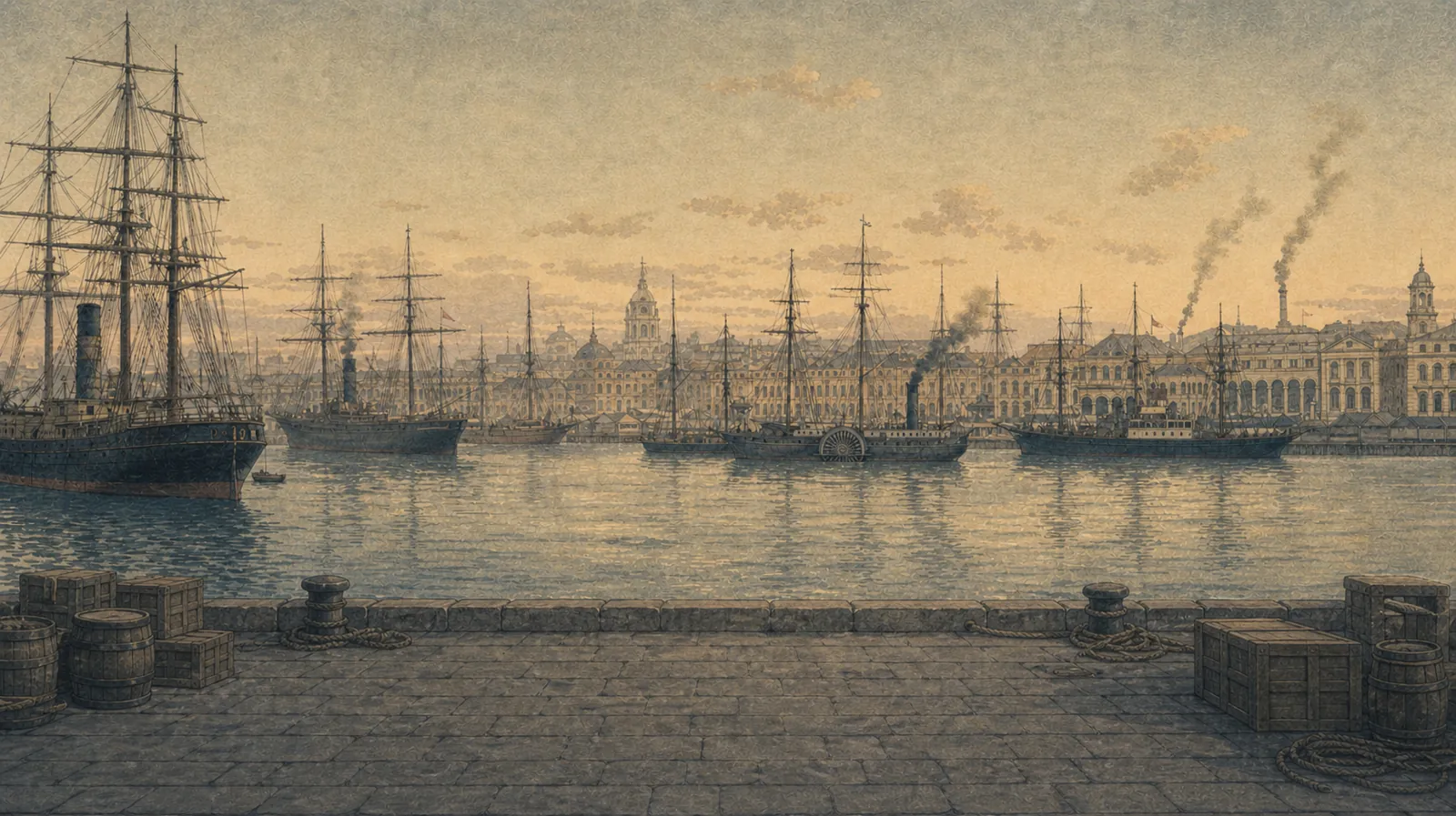
Shanghai, the Huangpu
Shanghai, the HuangpuMasts crowding the harbour and the foreign concession beyond — the Qing empire as Shinsaku saw it.
Chapter 41862

The Voyage to Shanghai

Bunkyū 2 (1862). A chance beyond all others came to Shinsaku. The shogunate, it was announced, would send a ship to Shanghai in the Qing to investigate the true state of trade. Its name was the Senzaimaru. As the man to place aboard this ship, the Chōshū domain chose Shinsaku. In an age of national seclusion, to cross the sea openly—for one who thirsted to see the world, it was a tale like a dream.

Aboard the Senzaimaru, which had set sail from Nagasaki, were gathered prodigies chosen from each domain. Nakamuta Kuranosuke of the Saga domain, and Godai Tomoatsu of the Satsuma domain—men who would later make their names were rocked by the same ship, across the barriers of domain. Among them, it is said, were some who, not permitted to board as proper domain samurai, disguised themselves as deckhands to get aboard. All bore the same thirst to see the world.

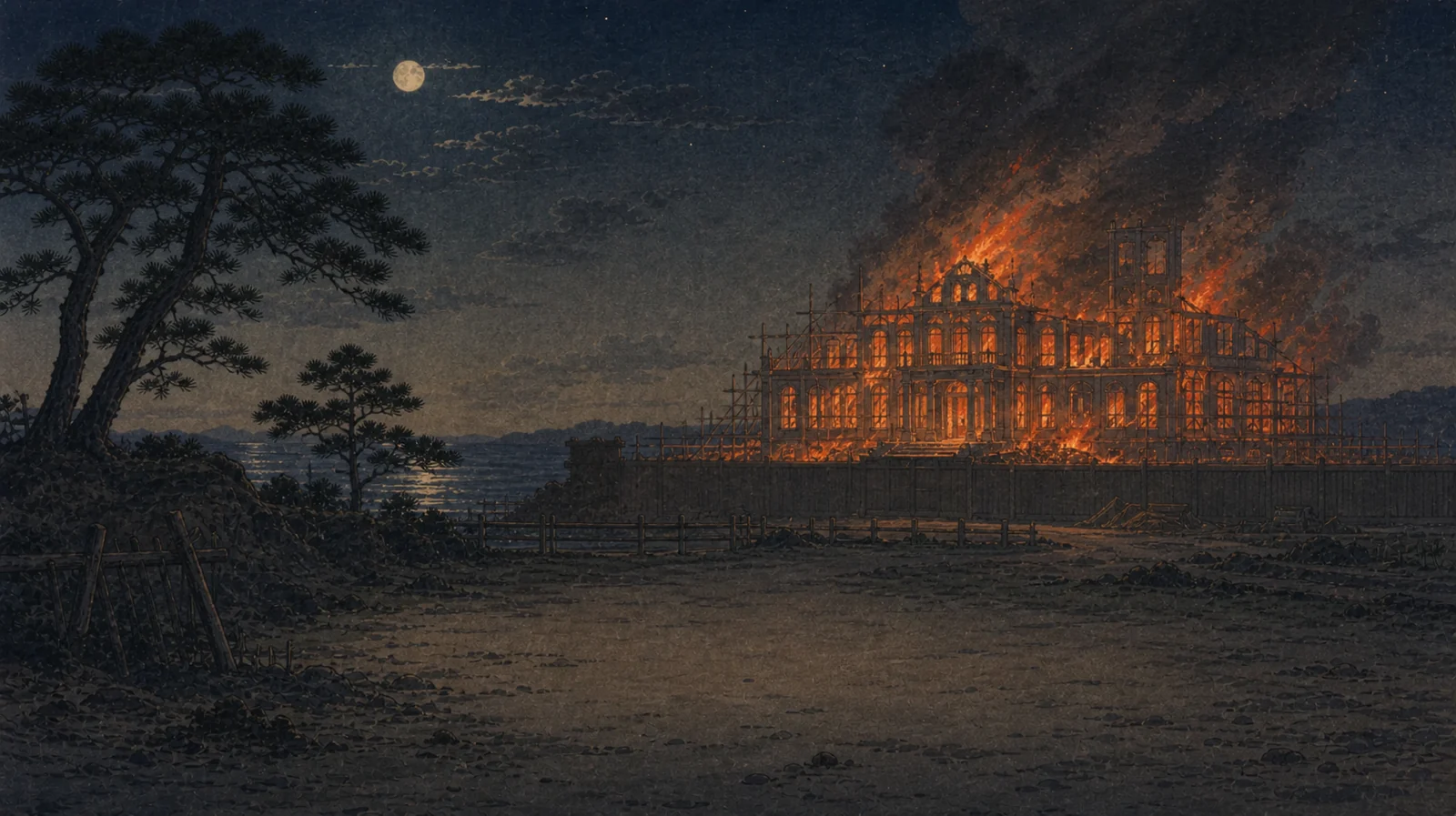
Gotenyama Ablaze
Gotenyama AblazeThe night the legation rising at Shinagawa was put to the torch.
Chapter 51863

Expel the Barbarian: Gotenyama

What awaited Shinsaku on his return from Shanghai was a Japan seething with the fever of expelling the foreigner. Drive out the barbarians—that cry now swept the whole country like a storm. Shinsaku was a man who had seared the ruin of Qing China into his eyes more vividly than anyone. His anger at the humiliation of a nation devoured by foreign powers burned fiercer than any other's.

It was precisely because he had come to know the reality of the world that he stood at the forefront of expelling the foreigner—a figure contradictory at first glance. Yet within Shinsaku there was no contradiction. The anger of "I will not let us be made into another Qing" pushed him toward the very center of the whirlpool of jōi. In Edo he bound himself, together with Chōshū comrades who held the same resolve, in a pact to carry out the expulsion.

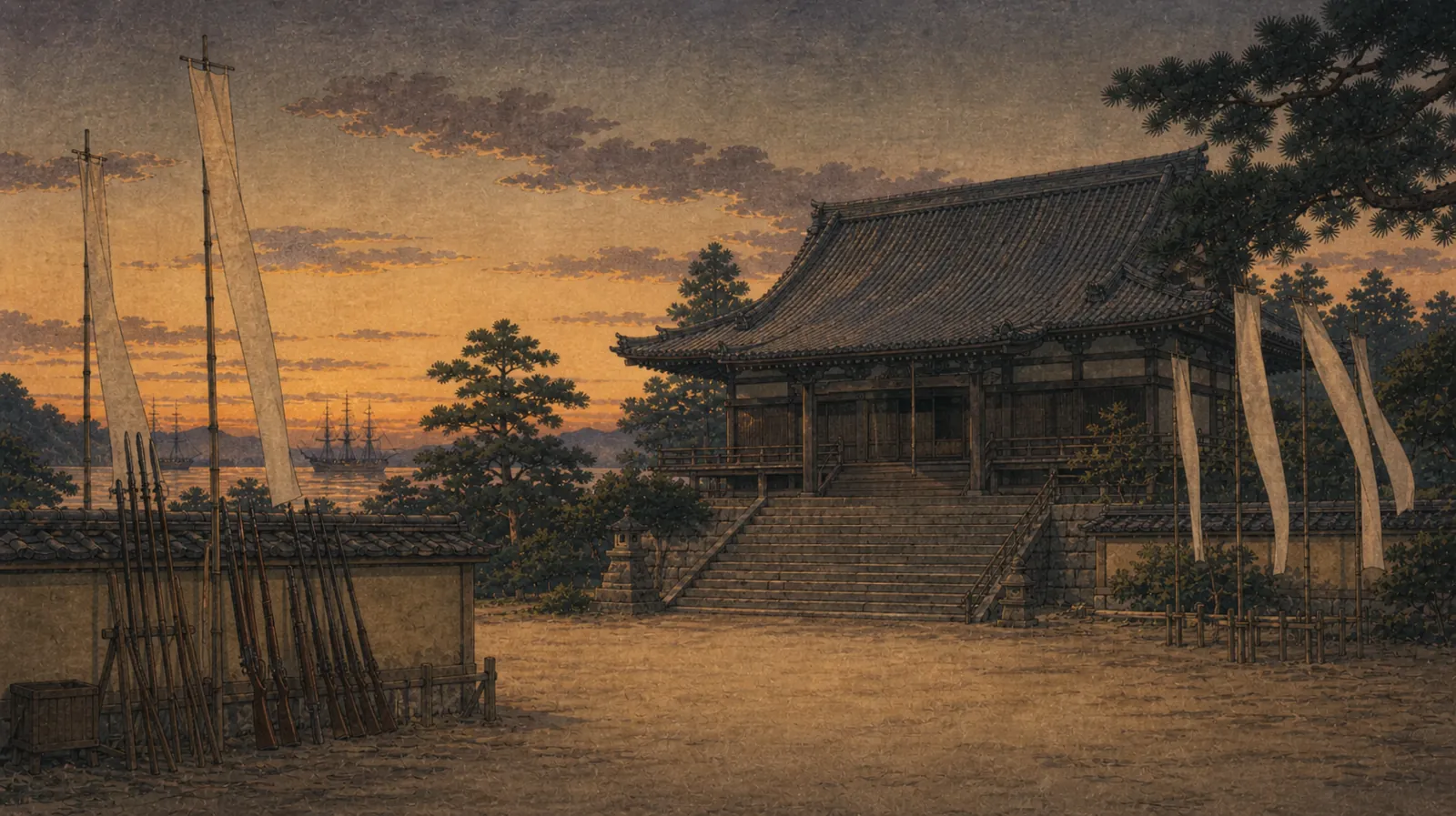
The Shiraishi House
The Shiraishi HouseThe house of a Shimonoseki merchant — the Kiheitai's base, where men of every rank gathered.
Chapter 61863

Forming the Kiheitai

Bunkyū 3 (1863). The Chōshū domain, having put the expelling of the foreigner into practice, fired upon the foreign ships passing through the straits of Shimonoseki. But the reprisal was ferocious. An allied fleet of the Western powers bore down upon Shimonoseki and, with the greatest ease, silenced the Chōshū batteries. Fighting spirit and old-fashioned defenses were utterly no match for the military power of the modern age.

This defeat was the moment when the foreboding Shinsaku had felt in Shanghai became reality. However hot the heart for expelling the foreigner might burn, without the power to make it real, Chōshū would only follow in the footsteps of Qing China. He preached to the domain at the top of his voice: with the old samurai army, they could no longer prevail against foreign nations. The army itself must be remade from its very foundations.

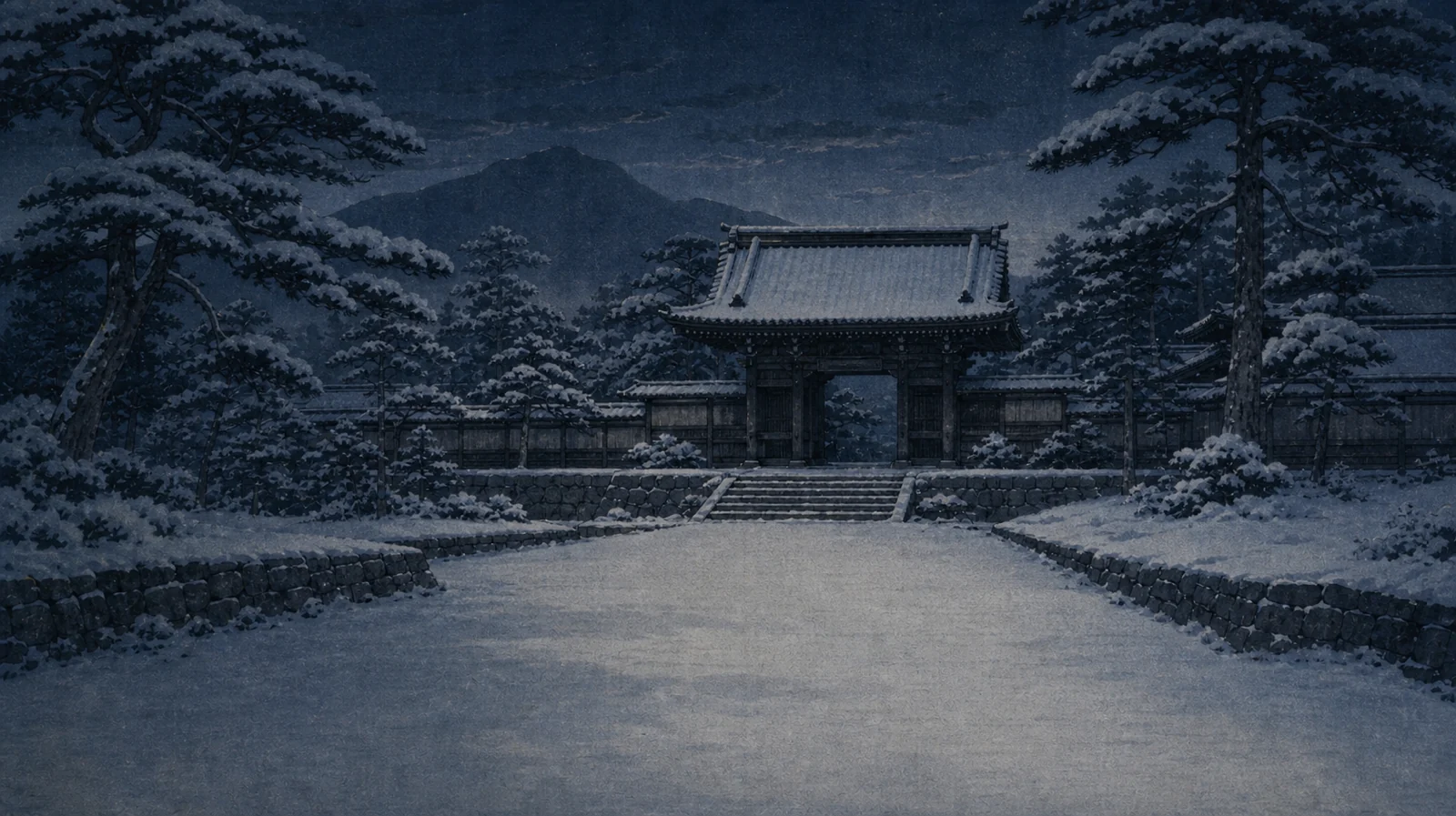
Kōzan-ji in Snow
Kōzan-ji in SnowThe gate before dawn — the snowbound morning he rose in arms with eighty-odd men.
Chapter 71864

The Rising at Kōzan-ji

Genji 1. The Chōshū domain had been driven into a plight such as it had never known before. Beaten in the fighting at Kyoto, saddled with the infamy of an enemy of the court—a rebel against the throne—it became the target of a punitive expedition, assailed by the great host of the shogunate. The loyalist men of purpose who had led the domain were cornered one after another. Chōshū, which had once gloried in its stand against the foreigner, now stood at the very brink of ruin.

Within the domain, the conservative faction—the Zokuron party, who preached submission to the shogunate—was swiftly regaining its strength. To quiet the shogunate's wrath, they seized the loyalist men of purpose one after another and put them to death. The flame of toppling the shogunate was, at any moment, about to be blown out. What had been so long built up was crumbling with an audible sound—and many, thinking that this was surely the end, turned their faces to heaven.

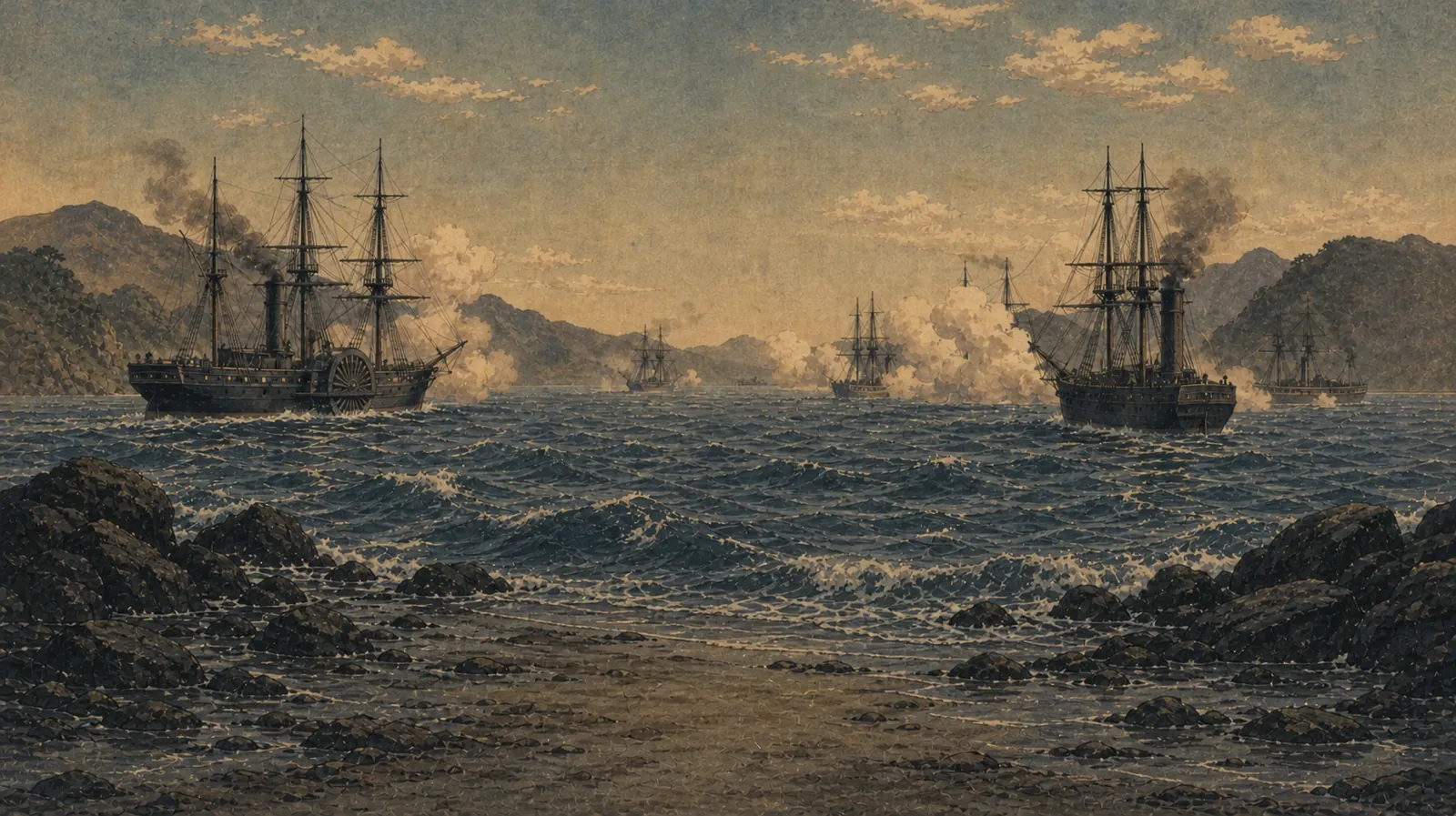
The Kanmon Straits
The Kanmon StraitsGunsmoke trailing over the water in the Four-Border War that drove back the shogunate's host.
Chapter 81866

The Four-Border War, and After

Keiō 2 (1866). Chōshū had turned its rudder toward toppling the shogunate with the rising at Kōzan-ji, and now the shogunate attacked it once more with a great host. The Second Chōshū Expedition—fought along the four borders of Chōshū, and so also called the Four-Border War. Against the shogunate bearing down with all its might, Chōshū was but a single domain. The difference in force of arms was plain to every eye.

But Chōshū was no longer the Chōshū of before. Taking its defeat at Shimonoseki as nourishment, it had reformed its military system, and the corps—the Kiheitai foremost among them—had been forged with Western-style equipment and drill. And the man entrusted with the defense of the sea in this war was Shinsaku. He led the navy, standing against the shogunate's army as it bore down. The man who had witnessed Western naval power with his own eyes at Shanghai now held the position of commanding a fleet himself.

The words he left

Collect his sayings and poems along the way.

  • Had I wings, I would fly beyond a thousand leagues and look upon every land on earth.
    A poem in a letter from around 1859, when he was twenty (Tōgyō Sensei Ibun), voicing his longing to see the world.
  • Longing after one who goes west, I go east — perhaps only the gods know what is in my heart.
    The poem said to be the origin of his pen name Tōgyō, “going east.”
  • A stratagem is best when it is kept close.
    A maxim on strategy attributed to him; its source is not firmly established.
  • Late though I follow — late indeed — never shall I forget the vow I swore to you.
    A poem offered in 1865 at the enshrinement rite of Sakurayama, to the spirits of comrades who had died for the cause (Tōgyō Sensei Ibun).
  • Others are others; I am myself. Only dwelling deep in the mountains does one truly see the world's rise and fall.
    A poem sent to his father in 1866, said to have been composed while convalescing at Sakurayama.
  • I would kill every crow in all three thousand worlds, and sleep late into the morning with you.
    A dodoitsu ballad said to be his; some attribute it instead to Kido Takayoshi.

Pursue his learning through discipline

Each action raises a discipline and unlocks the next stage of the story.

  • Swordsmanship

    A wooden sword in Hagi, and the finest blades of the realm in Edo — the force that opens the early story.

  • Insight

    The eye that reads the times — far ears and long sight learned from Shōin, and the world glimpsed at Shanghai.

  • Oratory

    The tongue that gathers men and talks them round — the debates with Kusaka, and recruiting without regard to rank.

  • Western Drill

    Western drill and the thinking behind a reorganized army — the reason a single domain could turn back the shogunate's host.

  • Boldness

    The torching of the legation, the fall from the corps he built, the rising with eighty-odd men — the nerve to move when all is cornered.

  • Command

    The power to move a domain's counsel and lead its corps — the rising at Kōzan-ji, and the command in the Four-Border War.

In a world where nothing is amusing, live it amusingly — what makes it so is the heart alone.
His best-known verse; the closing lines are said to have been added by Nomura Bōtōni.

Trace his life, now.

Sign up / Log in with Google

A limited-time event in the Japanese-style RPG EDO ONLINE

All Eiketsuden events