EDO ONLINE

EIKETSUDEN / EIKETSUDEN

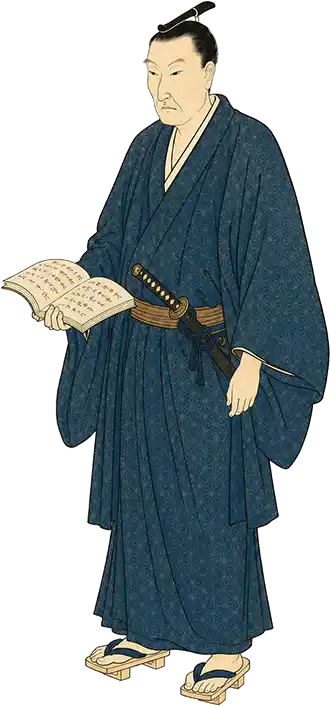
Yoshida Shōin

A man who staked his life on never ceasing to learn.

NOW LIVE4 days left

Event periodJun 25, 2026 19:00Jul 15, 2026 19:00

Bakumatsu Chōshū. The son of a humble samurai moved the course of history alongside the young men who gathered at his school. Eiketsuden: Yoshida Shōin is a limited-time event that retraces his thirty years through woodblock scenes and story — and lets you live them.

Sign up / Log in with Google
Learn more about EDO ONLINE

Who was Yoshida Shōin?

Yoshida Shōin (1830–1859) was a thinker and teacher of the late Edo period (bakumatsu), born into the Chōshū domain. The second son of a low-ranking samurai family in Hagi, he was adopted into the Yoshida house, hereditary instructors of Yamaga-school military science, and is said to have lectured before the daimyō Mōri Takachika at just eleven.

He travelled the country in search of learning, and in 1854 attempted to stow away aboard Perry's returning black ships at Shimoda to see the wider world for himself. The attempt failed; he was imprisoned, first in Noyama jail and then under house arrest at his family home.

There he took over the small private academy Shōka Sonjuku, where the young men who would drive the Meiji Restoration — Takasugi Shinsaku, Kusaka Genzui, Itō Hirobumi and others — studied under him. Caught up in the Ansei Purge, he was executed in 1859 at the age of twenty-nine. The Ryūkonroku and the death poem he left in his cell still move readers today.

Read more in our feature

Relive a whole life

8 chapters. Trace his life through woodblock scenes and story.

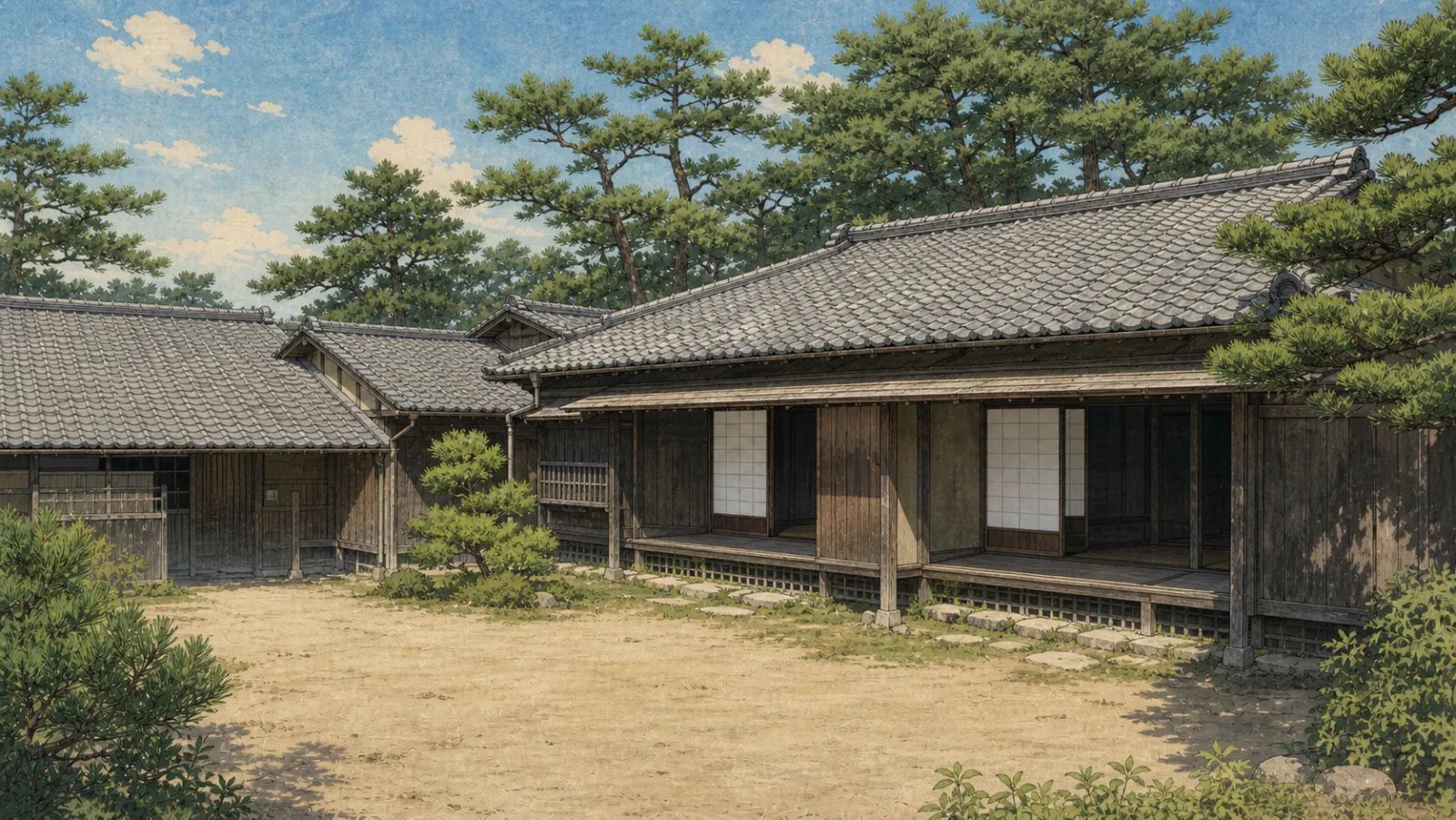
The Sugi Household
The Sugi HouseholdThe humble samurai home at Dangoiwa in Hagi where Shōin was born and raised.
Chapter 11840

The Sugi Household, Hagi

The first year of the Tenpō era. In Matsumoto village, just outside the castle town of Hagi in Chōshū, a baby boy gave his first cry. His father was Sugi Yurinosuke, a samurai of the slenderest stipend, ranked among the lower tiers of the Chōshū domain. The second son was named Toranosuke. This was the beginning of the man who would come to be known as Yoshida Shōin.

The Sugi were samurai in name more than in life. A few small fields surrounded their home, and the family took up the hoe themselves to scrape by. Father, mother, elder brother—and little Toranosuke too. For the Sugi, going out to the fields was as ordinary a part of the day as study itself.
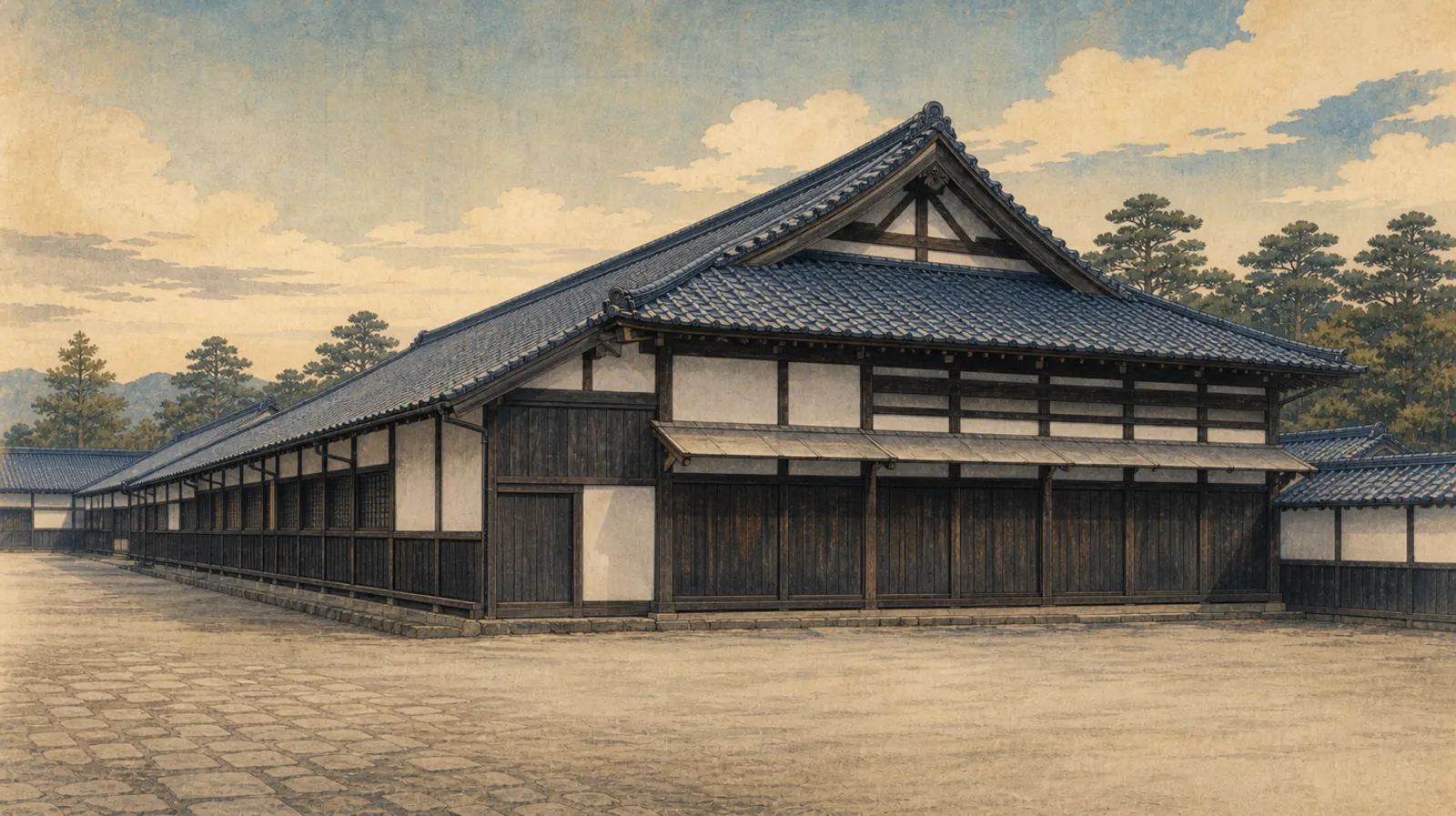
Meirinkan Academy
Meirinkan AcademyThe Chōshū domain academy where Shōin studied military science and Confucianism.
Chapter 21845

Meirinkan Academy

The boy, whose talent had been recognized at the lecture before the lord, in time took his place at the heart of Chōshū's learning—the domain academy, the Meirinkan. It was a place where the sons of samurai vied with one another in scholarship and martial skill. But Shōin joined it not only as one who learns.

The Yoshida were a house of Yamaga-school military-science instructors. As its head, Shōin—still only a boy—came to stand in the position of one who *taught* military science at the Meirinkan. Lined up before his lectern were samurai far older than himself.

Travels of Study
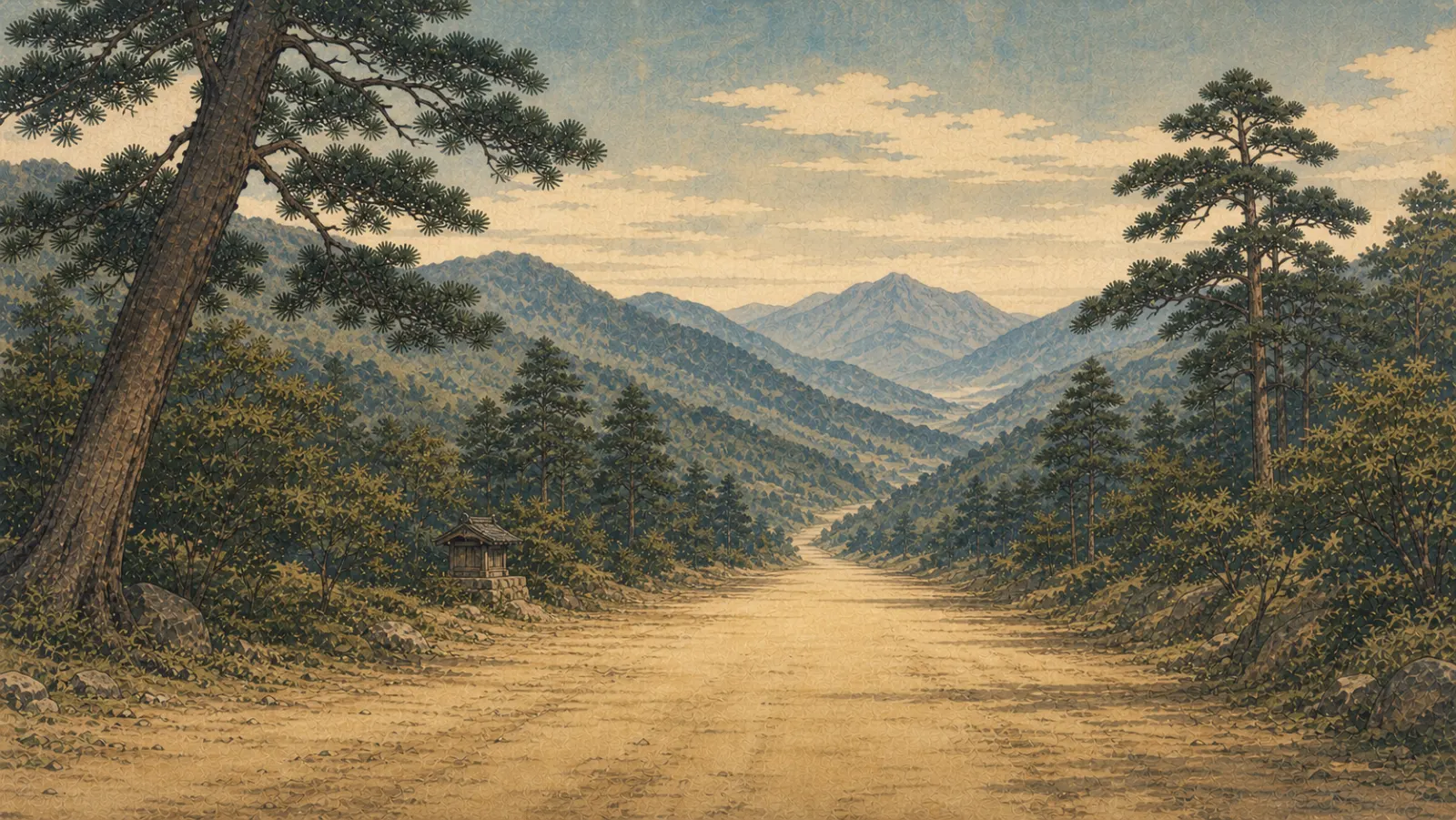
Travels of StudyThe highway Shōin walked in search of learning, evoking Hiroshige's post stations.
Chapter 31851

Travels of Study

The Kaei years. Shōin at last left Hagi with the domain's leave. He headed first for Kyūshū, to the west. At Hirado he devoured books, and at Nagasaki he could touch the presence of the West directly, without ever leaving Japan.

At Nagasaki, through the island of Dejima, the foreign goods brought by the Dutch and the knowledge of the West were flowing, unmistakably, into Japan. The presence of "the West," which he had known only within books, was here within arm's reach. Shōin's heart surged with the hunger to know.

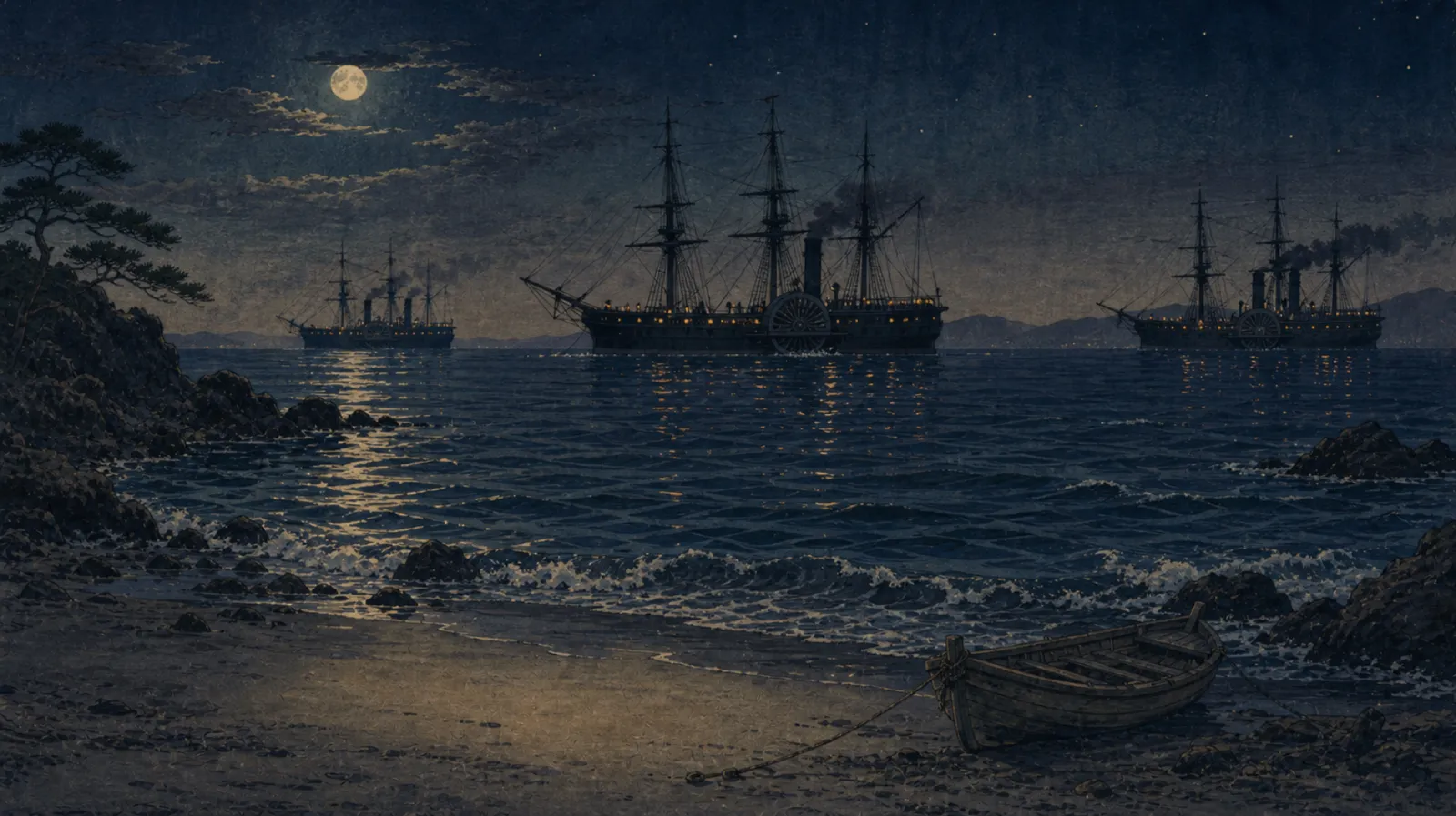
The Black Ships
The Black ShipsPerry's black ships moored in Shimoda bay by night — the eve of the failed crossing.
Chapter 41854

The Black Ships (Shimoda)

In the sixth year of Kaei, off Uraga in the sea of Sagami, four black ships appeared. It was a fleet led by the American envoy Perry. Belching steam and bearing cannon of a size never before seen, those ships sent a shudder through all of Japan.

Shōin, who was in Edo, saw those black ships with his own eyes. Not the West of books, nor the foreign vessels glimpsed from afar at Nagasaki—here was a raw mass of power, pressing for the country to open, thrust now against Japan's very throat.

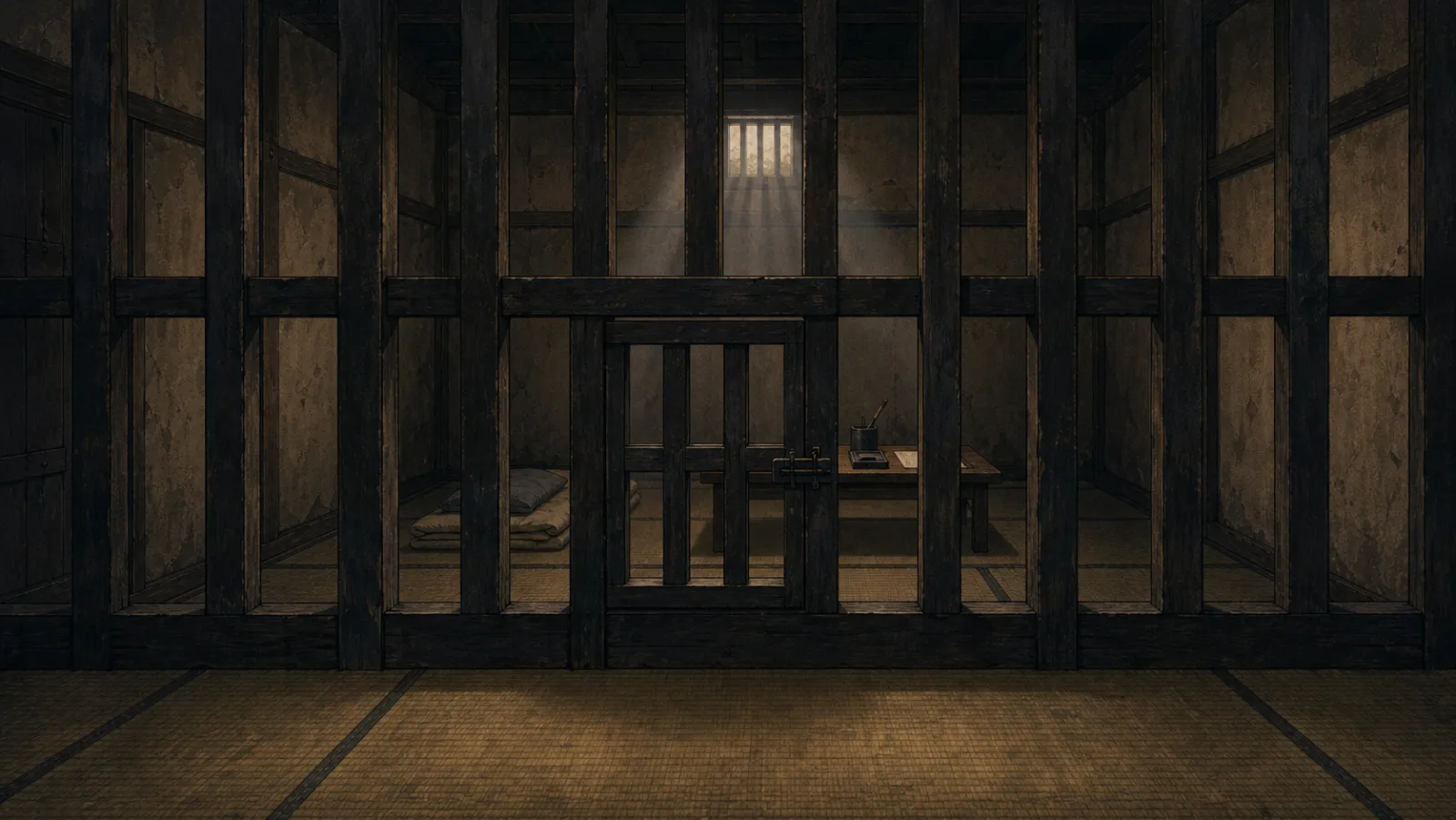
Noyama Prison
Noyama PrisonA cell of heavy lattice where Shōin studied and lectured to fellow prisoners.
Chapter 51855

Noyama Prison

His scheme at Shimoda having failed, Shōin was sent back from Edo to Hagi and confined in the Noyama prison. The boy who had inherited the proud house of a military-science instructor now lived within prison walls, a criminal.

Those held there were prisoners long forgotten by the world. Their crimes varied, their ages varied; most had given up trying to learn anything and merely let the days pass. It was a stagnant place, where hope had run dry.

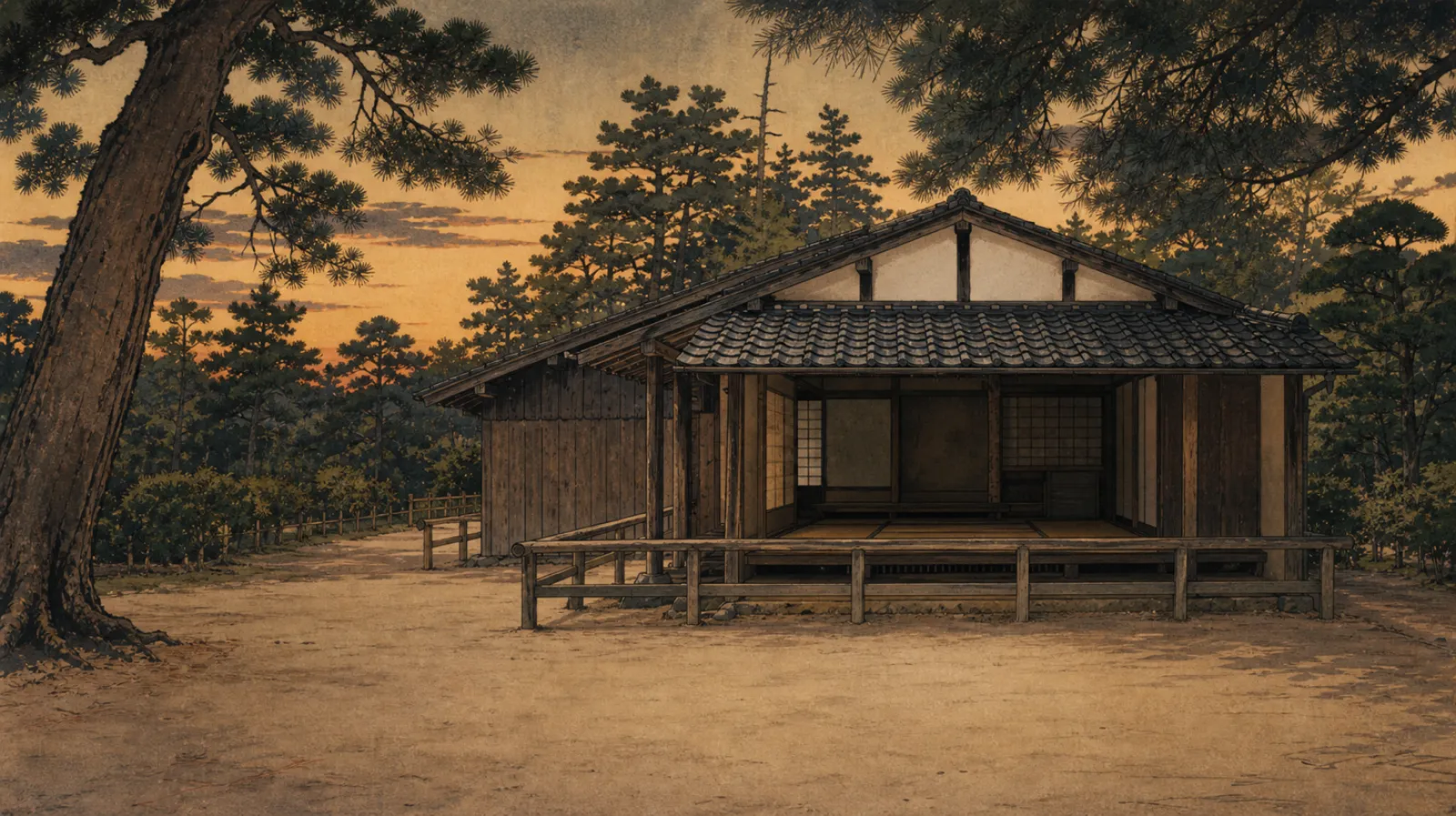
Shōka Sonjuku at Dusk
Shōka Sonjuku at DuskThe Shōka Sonjuku aglow at dusk — the school that raised the engine of the Restoration.
Chapter 61857

Shōka Sonjuku

Permitted to leave prison, Shōin was placed under house arrest at his family home. As a criminal, he could not even freely go outside. But within that scant freedom, he took up one task: to take over a small private academy that his uncle Tamaki Bunnoshin had opened, and that Kubo Gorōzaemon and others had since carried on—the Shōka Sonjuku.

It was an academy in name only—a humble building beginning from a single room of about eight tatami mats. There was no fine schoolhouse, no abundant library. There was only one man who wished to teach, and the young men who gathered wishing to learn. That was all. And yet from there, a fire that would move history was lit.

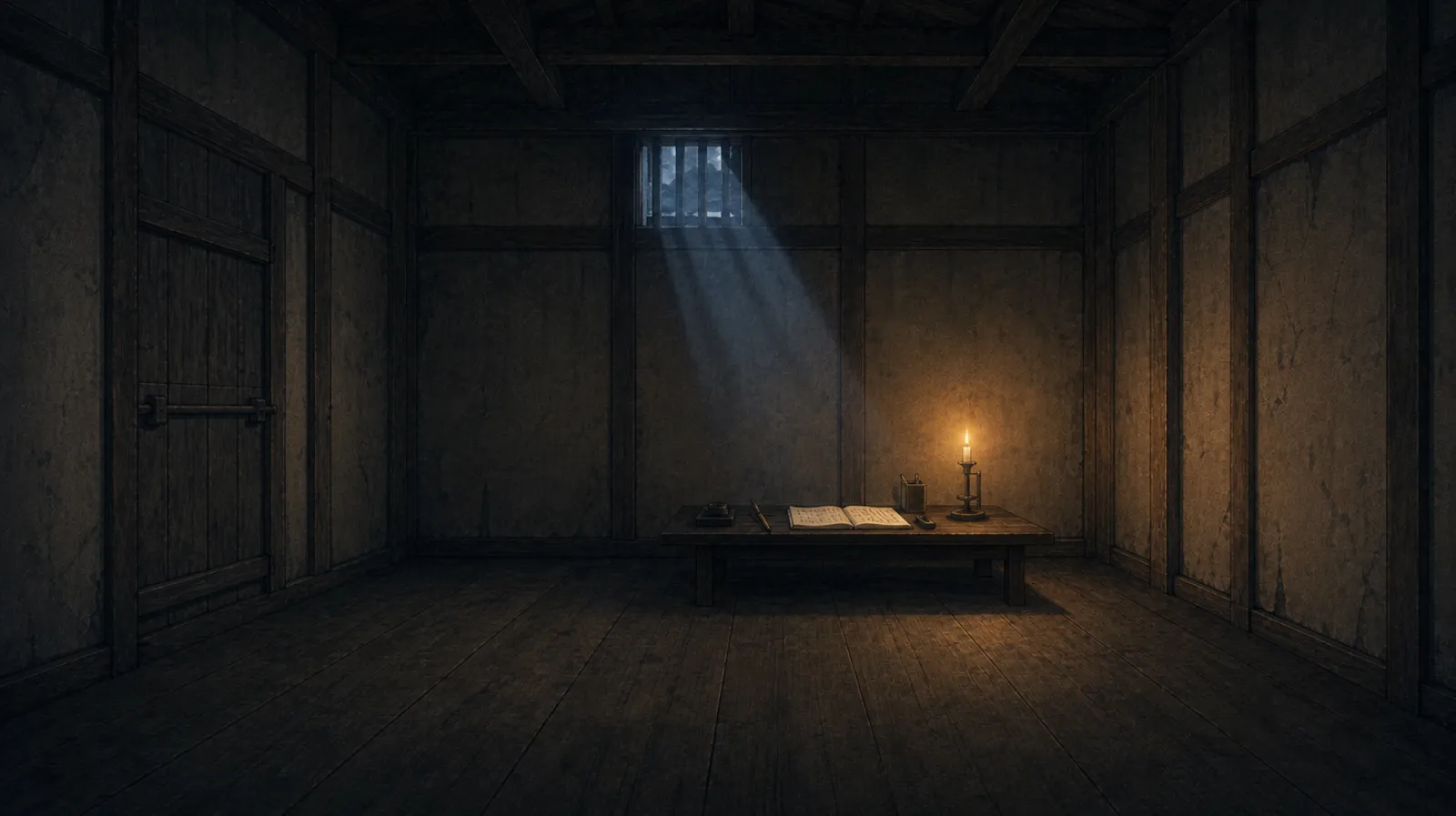
The Edo Cell
The Edo CellA cell in the Denmachō jail where Shōin wrote his death poem and the Ryūkonroku.
Chapter 71858

The Ansei Purge

In the fifth year of Ansei, a piece of news shook Shōin violently. The shogunate, it was said, had signed a treaty of commerce with a foreign nation without obtaining the court's permission. A signing without imperial sanction—Shōin took it as a grave affair that shook the very root of the nation's form.

—To bind a compact with a foreign land on one's own authority, without even seeking the emperor's leave. This is no mere error of governance. It is an outrage that tramples the nation's proper order. Pass it over in silence, and the backbone of this country breaks. Someone must raise his voice.

The Edo Cell
The Edo CellA cell in the Denmachō jail where Shōin wrote his death poem and the Ryūkonroku.
Chapter 81859

Record of a Departing Soul

In the sixth year of Ansei, the Tenmachō jail in Edo. Shōin was brought out before the shogunate's tribunal. At first, it is said, the shogunate did not intend to charge his crime so heavily. But in the course of that interrogation, matters moved in an unexpected direction.

Under questioning, Shōin spoke the contents of his breast without concealment. Even the plan to ambush Manabe—which he might properly have kept silent about—he went so far as to state of his own accord. The path of lying to escape punishment was one he had never, from the first, meant to choose.

The words he left

Collect his sayings and poems along the way.

  • Set your resolve, and make it the wellspring of all things.
    From the Shiki Shichisoku (Seven Rules for Samurai).
  • There has never yet been one who, with utmost sincerity, failed to move others.
    A saying from Mencius (Lilou I) that Shōin held dear.
  • Gentlemen, be mad.
    A phrase known for the spirit of "madness" Shōin prized (a later distillation).
  • Without a dream there is no ideal; without an ideal, no plan; without a plan, no action; without action, no success. So without a dream, there is no success.
    Widely attributed to Shōin, though no original source has been confirmed.
  • Though I knew well what would come of such a deed, my Yamato spirit would not be stilled.
    A poem composed on his attempt to stow away at Shimoda.
  • Even one who dies at ten has, within those ten years, his own four seasons.
    From the 'Four Seasons' passage of the Ryūkonroku.

Pursue his learning through discipline

Each action raises a discipline and unlocks the next stage of the story.

  • Military Science

    The family discipline of the Yamaga school. Honed through study and bouts.

  • Confucianism

    Deepened by lecturing — the learning he kept teaching even in prison.

  • Western Studies

    Knowing the world through reading and Dutch treatises, after the black ships.

  • Statecraft

    The will to govern, sharpened by debate over the affairs of the age.

  • Yōmeigaku

    Knowing and acting as one, found in tilling the field.

  • Letters

    Leaving words through writing — the brush that leads to the Ryūkonroku.

Though my body may rot in the fields of Musashi, my Yamato spirit I leave behind.
His death poem, from the Ryūkonroku.

Trace his life, now.

Sign up / Log in with Google